To compare supplier quotations, first check that they cover the same requirements, identify the costs included and assess the conditions that affect the purchase. A comparison table helps organise this information and support the selection with evidence.
The unit price is only one part of a quotation. A supplier may exclude transport, require a minimum order quantity or propose a delivery schedule that does not meet the company’s needs.
This article explains how to compare quotations on a consistent basis and presents an example with three suppliers to show how additional costs can change the result.
What to Check Before Comparing Supplier Quotations
Start by reviewing what each supplier is offering.
A well-defined RFQ, or request for quotation, helps suppliers respond to the same scope. However, you still need to check the quotations received and any exceptions they contain.
Before ranking prices, review:
- Product or service: specifications, materials, performance requirements and the versions of documents used.
- Quantity: units requested, batch sizes and any minimum order quantities.
- Delivery: destination, schedule and receiving requirements.
- Scope: transport, packaging, installation and other services included.
- Mandatory requirements: technical, quality or supply conditions that must be met.
- Validity: quotation date and the period for which its terms remain valid.
If a supplier proposes a technical alternative, identify it separately and confirm its acceptability before comparing it with the requested solution.
A lower price should not compensate for failure to meet an essential requirement.
How to Make Supplier Quotations Comparable
Making quotations comparable means assessing their prices and conditions on the same basis. This requires clarifying differences and documenting any adjustments.
Use the Same Quantities and Units
A price per item cannot be compared directly with a price per box. First, establish how many items each box contains and how many are actually required.
Volume discounts also need checking. A price conditional on purchasing 5,000 units is not equivalent to one available for an order of 1,000.
Separate Included Costs from Items Awaiting Confirmation
Each item should indicate whether it is included, carries an additional charge, does not apply or requires clarification.
An empty field does not mean a zero cost. If transport is not mentioned, confirm who is responsible for it and what it will cost before completing the comparison.
Apply Consistent Currency and Time Period Assumptions
When quotations use different currencies, choose a comparison currency and record the exchange rate and reference date.
For recurring services, compare the same period and scope: monthly charges, commitment length, usage limits and potential price adjustments.
Keep the Original Quotation and Record Adjustments
The comparison table should distinguish between:
- The amount quoted by the supplier.
- Confirmed clarifications or revisions.
- Adjustments made by the buyer for comparison purposes.
- Estimates that still require validation.
This prevents an internal assumption from being presented as a condition accepted by the supplier.
Which Criteria Should You Use to Evaluate Quotations?
Once you have checked the scope, assess the quotations against criteria relevant to the purchase.
| Criterion | What to review |
|---|---|
| Technical compliance | Alignment with specifications and any declared deviations. |
| Comparable cost | The price of the goods or services and any additional costs required for the defined scope. |
| Delivery lead time | The committed date or lead time and any conditions attached to it. |
| Quality and acceptance | Inspections, documentation and requirements for accepting the supply. |
| Payment terms | Advance payments, payment deadlines and associated conditions. |
| Warranty and service | Coverage, exclusions and support required. |
| Supply capacity | Availability to meet the requested volume and schedule. |
| Validity and price adjustments | How long the quotation remains valid and whether prices may change. |
The importance of each criterion depends on the requirement. Delivery may be decisive for an urgent purchase. For equipment requiring maintenance, operating and support costs may influence the decision.
Supplier evaluation provides information about the supplier’s capabilities. Quotation comparison examines what that supplier is proposing for a specific purchase.
Example of a Supplier Quotation Comparison Table
The following example is fictional and illustrative. It does not represent a real project or savings achieved by APTSE.
A company needs to purchase 1,000 parts, with the complete order delivered to one plant within a maximum of five weeks from order confirmation.
To simplify the example, assume that:
- All three suppliers meet the technical specifications and quality requirements.
- The quotations cover the same quantity and delivery destination.
- Prices are in euros, excluding VAT.
- Payment and warranty terms are equivalent.
- There are no tooling costs or other additional charges.
- Transport and packaging charges have been confirmed.
Cost Comparison
| Item | Supplier A | Supplier B | Supplier C |
|---|---|---|---|
| Quantity | 1,000 units | 1,000 units | 1,000 units |
| Unit price | €9.50 | €9.80 | €9.65 |
| Parts subtotal | €9,500 | €9,800 | €9,650 |
| Additional transport cost | €450 | Included: €0 extra | €150 |
| Additional packaging cost | €150 | Included: €0 extra | €100 |
| Comparable order cost | €10,100 | €9,800 | €9,900 |
| Comparable cost per unit | €10.10 | €9.80 | €9.90 |
| Delivery lead time | 4 weeks | 5 weeks | 6 weeks |
| Meets the delivery deadline | Yes | Yes | No |
In this example, the comparable cost is calculated as follows:
Comparable order cost = quantity × unit price + additional transport cost + additional packaging cost.
The calculations are:
- Supplier A: 1,000 × €9.50 + €450 + €150 = €10,100.
- Supplier B: 1,000 × €9.80 = €9,800, with transport and packaging included.
- Supplier C: 1,000 × €9.65 + €150 + €100 = €9,900.
The comparable cost per unit is calculated by dividing each total by the 1,000 parts.
What the Comparison Shows
Supplier A offers the lowest unit price. However, after adding transport and packaging, its quotation is €300 more expensive than Supplier B’s.
Supplier B has the lowest comparable cost and meets the delivery deadline. Under the assumptions of this example, it would be the preferred option on cost among the quotations that meet the requirements.
Supplier C has a lower cost than Supplier A but does not meet the delivery deadline. Before it could be selected, it would need to revise its delivery commitment, or the buyer would need to explicitly approve a change to the requirement.
The €300 represents a difference between quotations for this order, rather than savings against a previous purchase or an annual cost reduction.
Order Cost and Total Cost of Ownership
The calculation above covers only the items defined in the example: parts, transport and packaging.
Other purchases may require a broader assessment. Industrial equipment, for example, can involve installation, training, energy consumption, maintenance, spare parts and end-of-life disposal costs.
Assessing these costs over a period of use is known as total cost of ownership, or TCO.
For this comparison to be useful, all alternatives should be assessed using the same time horizon and operating assumptions. Confirmed costs should also be distinguished from estimates.
Not every purchase requires an extensive analysis. The level of detail should reflect the value, duration and risk of the decision.
How to Assess Conditions That Are Not Expressed in Euros
Lead times, service and flexibility can influence the decision even when they do not have a direct monetary value.
One way to organise the assessment is to separate two levels:
- Mandatory requirements: determine which quotations are acceptable.
- Evaluation criteria: help compare the quotations that meet those requirements.
If you use a scoring matrix, define what each score means, what evidence supports it and how much weight each criterion carries before evaluating the quotations.
Avoid assigning precise scores to incomplete information. A condition awaiting confirmation should remain clearly identified.
Also avoid counting the same effect twice. For example, if maintenance costs are already included in the cost calculation, any further consideration of them under another criterion should be justified.
How to Document the Purchasing Decision
The comparison table should make it clear why a quotation was selected and which conditions must be maintained when placing the order.
At a minimum, record:
- The identification and version of each quotation assessed.
- The quantity and scope used in the comparison.
- Included costs, exclusions and adjustments.
- Compliance with mandatory requirements.
- Confirmed clarifications and outstanding questions.
- Reasons for the selection.
- The approver and approval date.
If the selected supplier does not have the lowest comparable cost, explain why: a necessary delivery date, a relevant additional service or an accepted technical difference.
Before issuing the order, check that the selected conditions match the latest confirmed version of the quotation.
Common Mistakes When Comparing Supplier Quotations
Choosing Based on Unit Price
This can overlook items that change the result, such as transport, packaging, installation or minimum order quantities.
Assuming Unspecified Items Are Included
An omission requires clarification. Treating it as a zero cost can give an incomplete quotation an artificial advantage.
Comparing Different Versions of the Scope
If one supplier uses an updated drawing and another uses an earlier version, their prices may reflect different requirements.
Applying Discounts That Are Not Available
Check whether a discount depends on a purchase volume, payment deadline or contract duration that the company can actually commit to.
Confusing an Estimate with a Commitment
An indicative lead time is not equivalent to a confirmed delivery date. The distinction should remain visible in the assessment.
Mixing Valid and Expired Quotations
Before deciding, confirm that the prices and conditions still apply.
How APTSE Helps You Compare Quotations
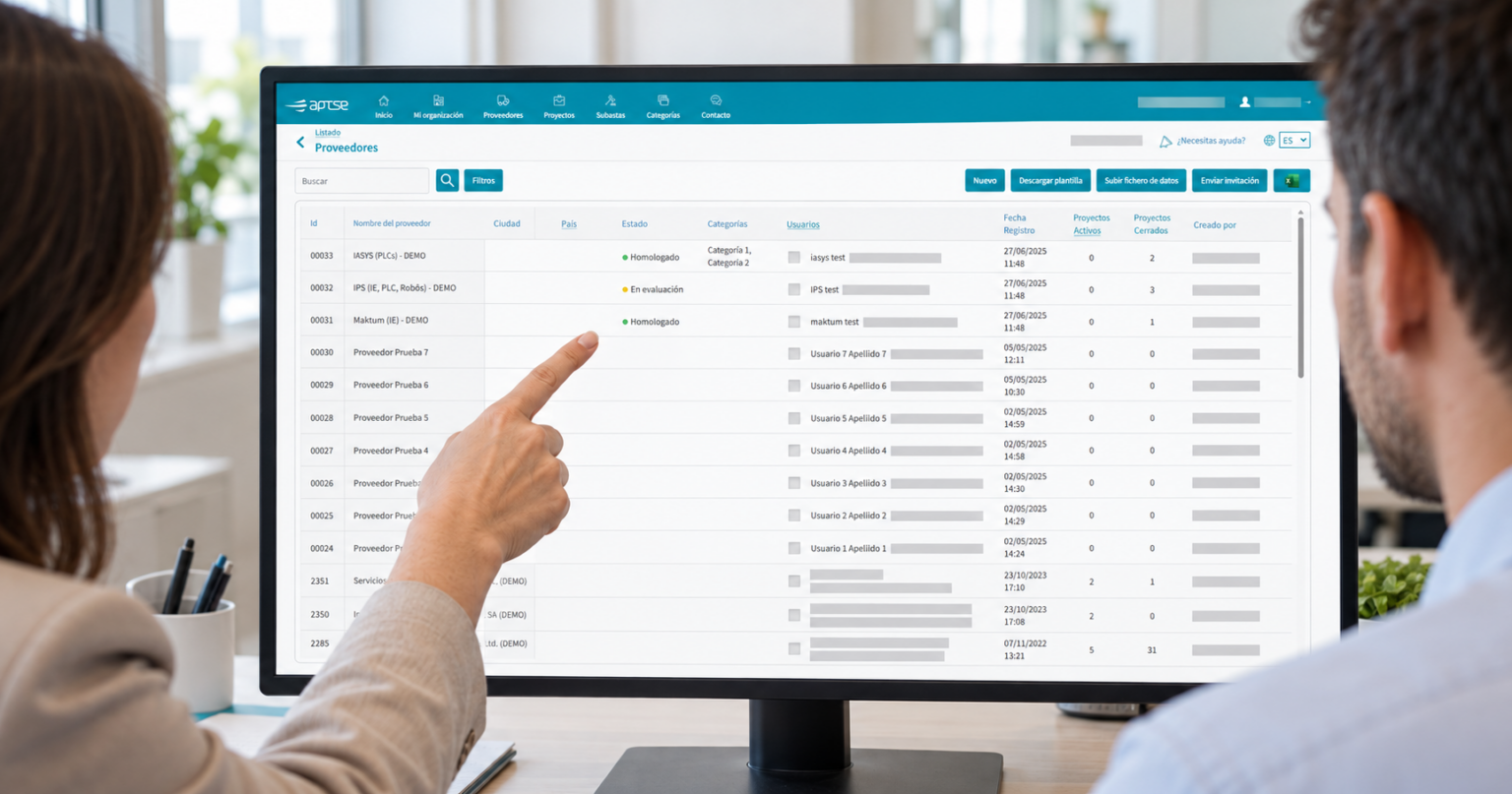
APTSE’s RFQ software allows buyers to structure requests using cost breakdown templates and analyse the quotations received in one place.
The platform also supports file sharing and supplier communications, allowing clarifications to be managed within the project.
A common structure helps the team review the components of each quotation. Validating specifications, making comparison adjustments and reaching the final decision remain the buying team’s responsibility.
Frequently Asked Questions About Quotation Comparison
What Should a Quotation Comparison Table Include?
It should include the scope, quantities, prices, additional costs, lead times and relevant conditions. It should also identify unmet requirements and information awaiting confirmation.
Should You Always Choose the Cheapest Quotation?
The decision should reflect the purchase requirements and established criteria. The lowest unit price may not represent the lowest comparable cost or meet the necessary conditions.
Can You Compare an Incomplete Quotation?
You can add it to the table to identify what is missing, but outstanding information must remain visible. If it could affect the decision, resolve it before making a selection.
Can You Use Excel?
Yes. A spreadsheet can support a straightforward comparison. As the number of suppliers, revisions and communications grows, define how versions will be controlled and information kept up to date.
Organise Supplier Quotation Comparisons with APTSE
Comparing supplier quotations requires a common basis, complete costs for the defined scope and clear decision criteria.
A well-prepared table helps identify differences, request clarifications and explain the selection. Its purpose is to help the procurement team make decisions using verifiable information.
To centralise your requests, documentation and quotation analysis, contact the APTSE team and request a demonstration.