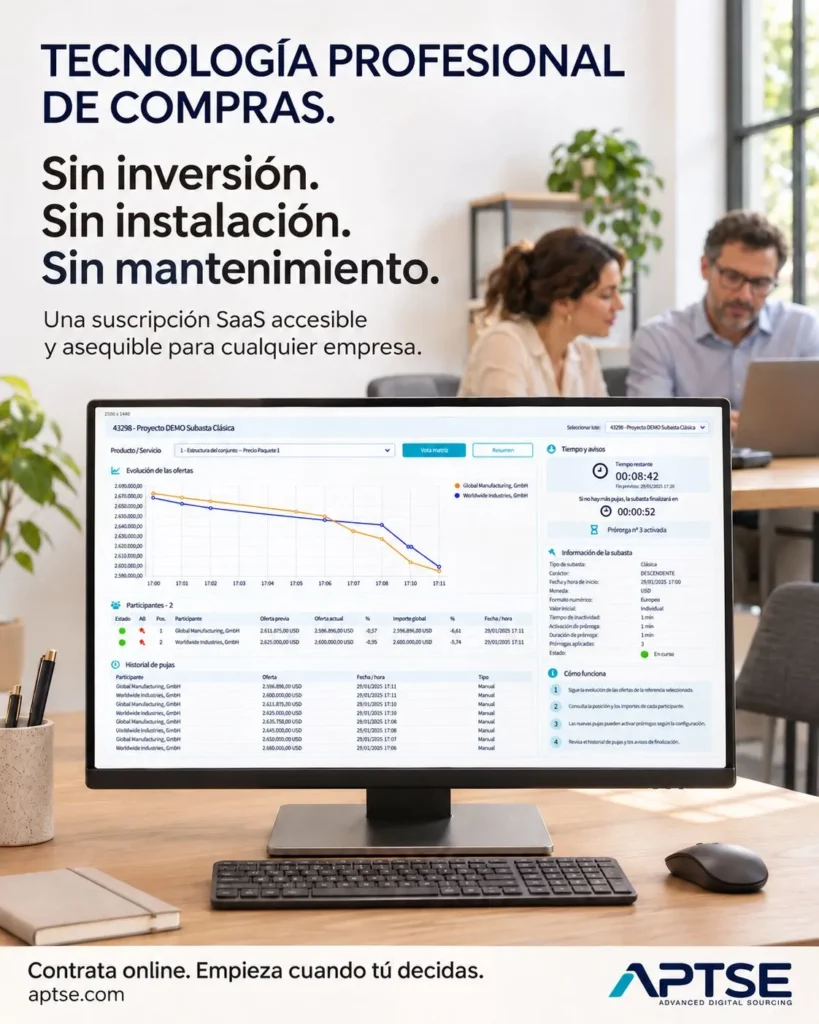
Procurement digitalisation can start with a single project and a platform accessed through your browser. The SaaS model gives businesses access to professional software through a subscription, without purchasing their own infrastructure or maintaining the platform themselves.
Many companies postpone this step because they associate it with a complex implementation, a substantial upfront investment or additional work for their team. Meanwhile, requests continue to circulate by email, and quotations are compared in files that need constant updating.
APTSE offers a way forward: bringing information requests, quotations and supplier negotiations together in one digital environment. The starting point can be a purchase the team already plans to manage.
What Procurement Digitalisation with a SaaS Platform Means
SaaS stands for Software as a Service. A company subscribes to an application and accesses it over the internet.
With APTSE, this model enables teams to organise supplier selection and negotiation processes through their browser. The service provider handles platform maintenance.
For procurement teams, the change means having a shared environment in which to prepare requests, receive responses, review documents and compare proposals.
Digitalisation also requires decisions about how that environment will be used: what information to request, who will review the responses and how decisions will be documented.
Three Barriers the SaaS Model Helps Reduce
1. Purchasing Software and Infrastructure Upfront
Subscription access removes the need to purchase a solution for installation and maintenance on your own infrastructure.
This allows businesses to assess the platform against their requirements and the terms of their chosen plan. The subscription has a cost, and the team needs to devote time to preparing its processes and learning how to use the tool.
When assessing a solution, consider the price alongside the included functionality, available users and support. You can review the available options through APTSE’s website.
2. Installing Software on Individual Computers
APTSE runs through a browser. Teams can access their workspace without installing a desktop application to manage requests and negotiations.
Browser access simplifies the technical setup. Preparing the first project still matters: information needs to be organised, requirements defined and participating suppliers identified.
Having access to the platform and having a request ready to send are separate steps. Planning both helps the team get started in an organised way.
3. Maintaining the Software
Under APTSE’s SaaS model, customers do not have to handle the platform’s technical maintenance.
The procurement department can focus on its responsibilities: defining requirements, reviewing proposals, resolving questions and negotiating terms.
The company remains responsible for the information it enters, the access it authorises and the decisions it makes throughout the process.
Which Procurement Processes Can You Organise in APTSE?
The platform brings together tools for managing different stages of supplier engagement.
| Process | Purpose |
|---|---|
| Request for Information — RFI | Gather information about suppliers’ capabilities, experience and solutions |
| Request for Quotation — RFQ | Request prices and commercial terms for a defined requirement |
| Request for Proposal — RFP | Receive proposals explaining how to meet a requirement, including technical and commercial aspects |
| Response analysis | Review documentation and compare submitted proposals |
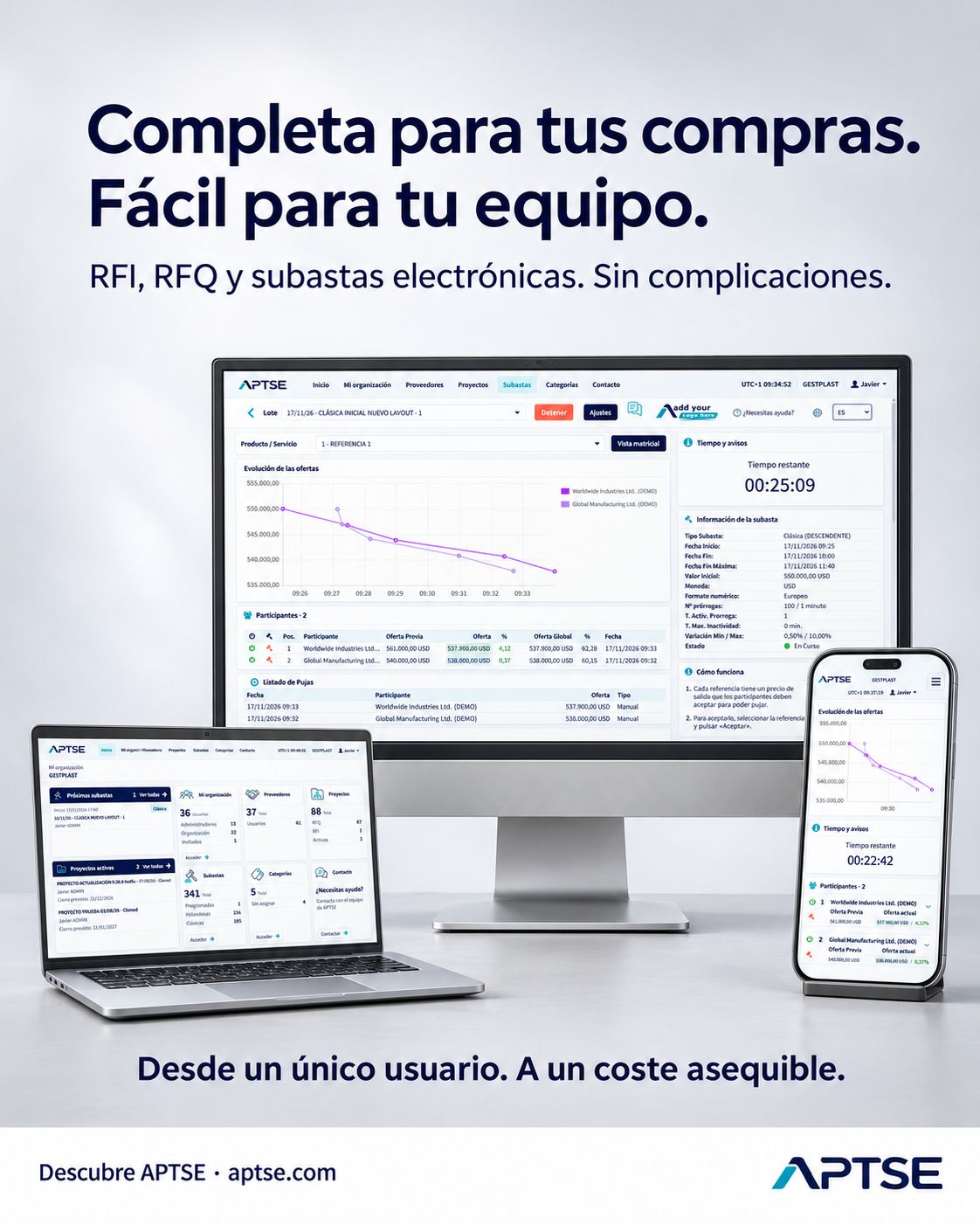
| Electronic auction | Conduct a competitive negotiation under previously established rules |
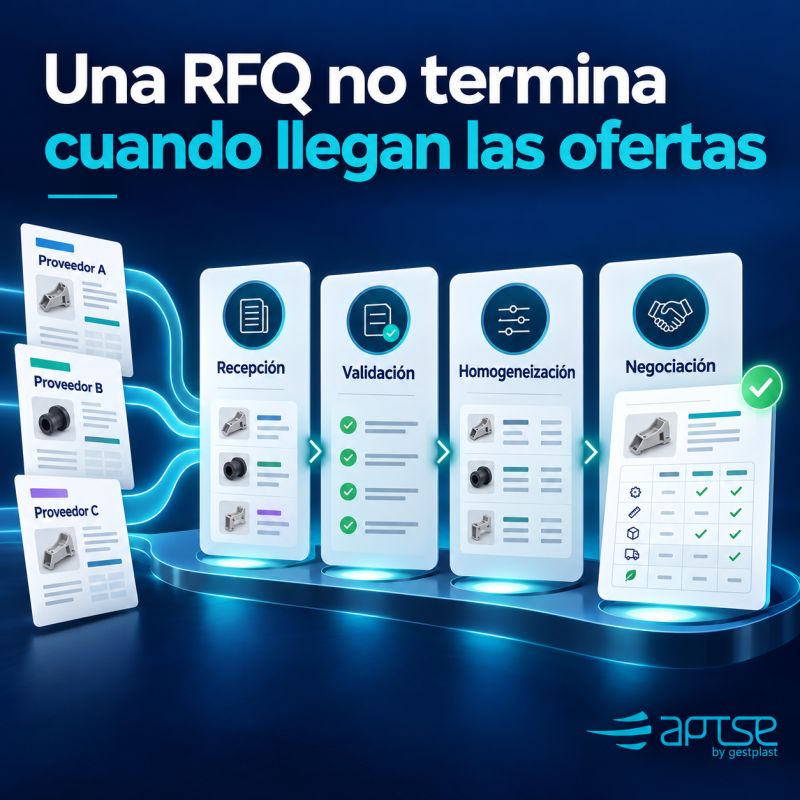
The choice depends on the information available and the decision that needs to be made. If information about the market or supplier capabilities is still missing, an RFI may be a useful starting point. Once the scope is defined, an RFQ allows suppliers to submit quotations on a common basis.
APTSE’s RFQ software enables teams to structure cost breakdowns, collect documents and centralise project communications.
An electronic auction can be introduced once the proposals are ready to compete. Before starting that stage, it is important to validate technical requirements, commercial terms and quotation exclusions.
How to Start Procurement Digitalisation with a First Project
Choose a Purchase with a Manageable Scope
Select a process that allows you to test a structured way of working. This could be a planned request for quotation with known requirements and identified suppliers.
The team should be able to devote time to preparing the request and reviewing responses. A purchase with too many unresolved issues will make it harder to distinguish between problems within the project itself and adjustments needed to adopt the tool.
Define What You Want to Improve
A specific objective makes the experience easier to evaluate. For example:
- Bring project documentation together in one environment.
- Ask every supplier for a comparable cost breakdown.
- Check the status of supplier responses.
- Reduce manual preparation of quotation comparisons.
- Keep clarifications linked to the procurement process.
Choose the most relevant objectives for the first project and decide how you will assess them.
Prepare the Information Before Inviting Suppliers
Gather the specifications, quantities, dates and commercial terms suppliers need to respond.
Define which documents participants must provide and which questions require a mandatory response. A clear request reduces subsequent clarification and makes comparison easier.
If supplier capabilities need to be assessed before requesting prices, include that review in the information-gathering stage. Supplier management should help identify which candidates meet the purchasing requirements.
Assign Responsibilities and Set a Schedule
Determine who will prepare the request, answer supplier questions and review the technical and commercial aspects.
Set a response deadline and allow time to analyse the proposals. The platform helps organise the work; responsibilities still need to be clear within the team.
Review the Results Before Expanding Its Use
When the project closes, identify what worked and what needs adjustment.
Check whether quotations arrived complete, whether clarifications were recorded and whether the team could compare proposals with less manual preparation.
This review helps improve templates and procedures before applying the same approach to other purchases.
What to Measure in Your First Digital Procurement Process
Evaluation can begin with straightforward indicators that the team can record:
| Indicator | What it helps assess |
|---|---|
| Time spent preparing the comparison | Work required to gather and organise quotations |
| Complete responses received by the deadline | Clarity of the request and follow-up of supplier participation |
| Clarifications caused by missing information | Areas where the questionnaire or instructions need improvement |
| Documentation collected within the project | Availability of the information needed to review proposals |
| Record of the final decision | Ability to establish what was selected and why |
To assess an improvement, use a comparable reference: a previous process with similar characteristics or a documented initial estimate.
Commercial outcomes can also be assessed, but they should be distinguished from administrative time savings. Each provides different information about how the process is working.
Accessing the Technology and Preparing the Process
Gestplast’s post highlights the option to purchase a subscription online and access APTSE when the company needs it. This simplifies access to the tool and allows the business to plan its first project.
Before subscribing, review the current service terms and check that the selected option meets your requirements. A demonstration can help you understand how to transfer your information request or request for quotation to the platform.
Straightforward access is particularly useful when supported by a specific requirement, a designated project owner and a measurable objective.
Start Digitalising Your Procurement with APTSE
A more structured approach to requests and negotiations can begin with one well-defined purchase.
APTSE brings information, proposals and communications together in a SaaS platform, with browser access and without the need to manage the software’s technical maintenance.
To explore how it could work in your company, contact the APTSE team and request a demonstration. You can discuss which process to tackle first and which subscription option suits your way of working.