Procurement management is the set of processes through which a company identifies its purchasing requirements, selects suppliers, requests and analyzes proposals, negotiates terms and formalizes the acquisition of the products or services it needs to operate.
Procurement therefore involves much more than requesting a price and issuing a purchase order.
Effective procurement management should ensure that the company obtains the right product or service, with the required specifications and quality standards, at the right time and under competitive financial and commercial conditions.
Procurement decisions can also have a direct impact on costs, supply risk, supplier relationships, quality and the amount of time teams spend managing sourcing and negotiation processes. This is why Gestplast approaches procurement as a structured process that combines supplier knowledge, RFx processes, proposal analysis and negotiation.
What is procurement management?
Procurement management covers the decisions required to transform an internal business need into a purchase that has been properly defined, evaluated, negotiated and agreed with a supplier.
The process begins long before a quotation is received. The company must first understand what it actually needs, define the relevant specifications, identify which suppliers are capable of meeting those requirements and establish the conditions under which they will submit their proposals.
Once the responses have been received, Procurement needs to determine whether they are truly comparable before moving into negotiation.
This point is particularly important. Two quotations are not necessarily comparable simply because both contain a price.
A lower price may no longer represent the best option when there are significant differences in quality, transportation, delivery time, warranties, production capacity, payment terms or other requirements that matter to the company.
The approach applied by Gestplast is therefore based on understanding the market, supplier capabilities and the content of each proposal before negotiating. The objective is to achieve competitive conditions without compromising the required specification or quality.
Why is procurement management important?
A Procurement department can contribute significantly more value to an organization than simply processing orders.
A structured process makes it easier to understand the supplier market, identify alternatives and compare proposals on a consistent basis. It also provides better information for decision-making and can reduce excessive dependency on individual suppliers.
Long-standing supplier relationships can provide stability, experience and trust. However, this should not prevent a company from understanding what alternatives exist in the market or whether its current purchasing conditions remain competitive.
Good procurement management therefore requires a balance between cost, quality, delivery, capacity, risk, service and commercial conditions.
Main objectives of procurement management
Achieving competitive purchasing conditions
Obtaining competitive commercial conditions is one of Procurement’s most visible objectives. However, optimization should not be confused with simply selecting the lowest price.
A purchasing decision may need to consider transportation, investments, payment terms, warranties, maintenance, delivery schedules and other costs associated with the acquisition.
The financial comparison should therefore take place only after Procurement has confirmed that the proposals address the same requirement.
We explore this approach in more detail in “Procurement Cost Reduction: Sourcing and Digital Negotiation Strategies”, where cost reduction is considered as part of a broader optimization process rather than simply choosing the lowest price.
Ensuring specifications and quality requirements are met
An attractive price has little value if the supplier is not offering what the company actually needs.
Before negotiating, Procurement should verify that each proposal complies with the technical, commercial and quality requirements established for the project.
A clear definition of the requirement at the beginning of the process also makes subsequent analysis much easier. When suppliers respond to equivalent specifications and conditions, their proposals can be compared more objectively.
Selecting the right suppliers
The quality of a sourcing process also depends on the companies invited to participate.
The objective is not to request quotations from as many suppliers as possible, but to identify those that are genuinely capable of meeting the organization’s needs.
In established purchasing categories, the company may already have a panel of qualified suppliers. In less familiar markets, it may first need to identify alternatives and gather information about their capabilities, experience and available solutions.
An RFI —Request for Information— can be particularly useful at this stage. It enables Procurement to collect and compare supplier information before deciding which companies should proceed to a commercial sourcing process.
Reducing supply risk
Understanding the supplier market also helps reduce risk.
Excessive dependence on a single source can become a problem when circumstances change, whether because of capacity constraints, quality issues, logistics, price increases or business continuity problems.
This does not mean replacing reliable suppliers unnecessarily. It means having enough information about the market to understand what alternatives are available if they are ever needed.
Supplier knowledge is therefore both a negotiation tool and an important element of supply resilience.
Improving efficiency and traceability
Purchasing processes can generate a considerable volume of information: specifications, supporting documents, questionnaires, quotations, clarifications, communications and multiple file versions.
When this information is distributed across spreadsheets and individual email conversations, administrative work increases and it becomes more difficult to understand what happened during a project.
APTSE is designed to centralize these processes, helping Procurement teams organize supplier requests, documentation, communications and responses within a common environment.
Main stages of the procurement process
Although every organization should adapt its procedures to its own structure, most purchasing projects include several common stages.
1. Define the requirement
The process begins by determining exactly what needs to be purchased.
Procurement usually works with the requesting department to define the specifications, quantities, quality requirements, deadlines, delivery locations and any other relevant conditions.
The better the requirement is defined, the easier it will be for suppliers to prepare comparable proposals.
2. Analyze the market and select suppliers
The next step is to determine which suppliers are capable of meeting the requirement.
For a familiar purchasing category, existing qualified suppliers may be sufficient. In other cases, Procurement may need to research the market, assess new candidates or gather additional information before moving forward.
An RFI can be used at this stage to better understand supplier capabilities and available solutions.
3. Request information or quotations
Once the requirement and potential participants have been identified, the appropriate RFx process can begin.
An RFI is useful when more information is required before the purchase can be fully defined. An RFQ —Request for Quotation— is more appropriate when the requirement is sufficiently clear and the company wants to receive comparable commercial proposals.
In “RFQ vs RFI: Differences and When to Use Each Process”, we explain in greater detail when each process should be used.
The APTSE RFQ software supports the process from the creation of the request through to the receipt and comparison of supplier quotations.
4. Analyze and compare proposals
This is one of the most important stages of procurement management.
Before deciding or negotiating, Procurement must make sure that the proposals are technically valid and have been prepared using equivalent assumptions.
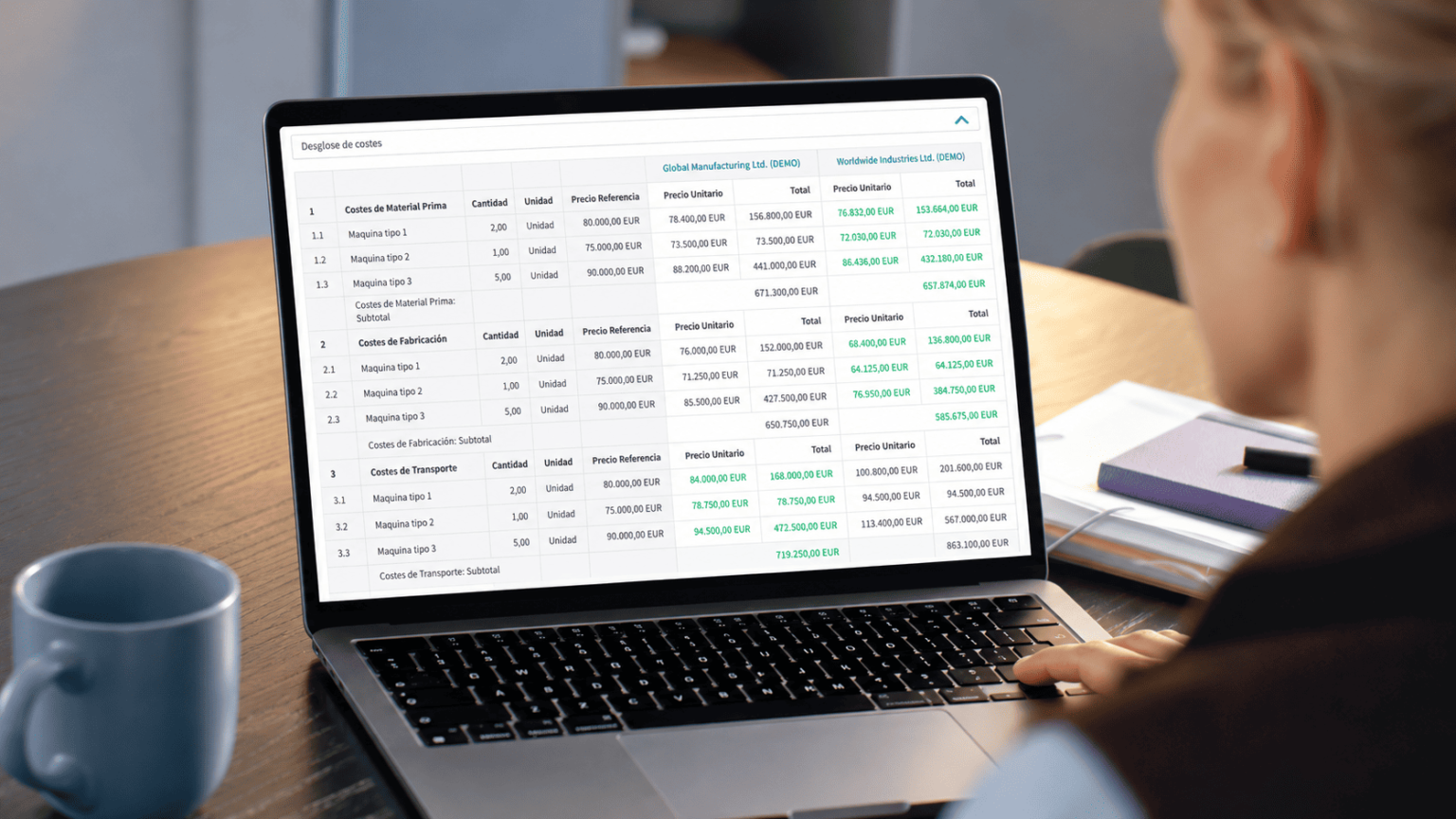
If every supplier presents information in a different format, considerable time may be required simply to normalize the data before a meaningful comparison can be made.
APTSE allows purchasing teams to create structured cost breakdowns so that the different components of supplier quotations can be analyzed separately.
The objective is not simply to identify the lowest figure. It is to understand what each supplier is offering and why the proposals differ.
5. Negotiate
Once the proposals have been validated, the purchasing team can define the most appropriate negotiation strategy.
The method will depend on the market, the purchasing category, the number of qualified suppliers and the level of competition.
Some projects may only require direct negotiation. Others may involve a new quotation round or an electronic auction.
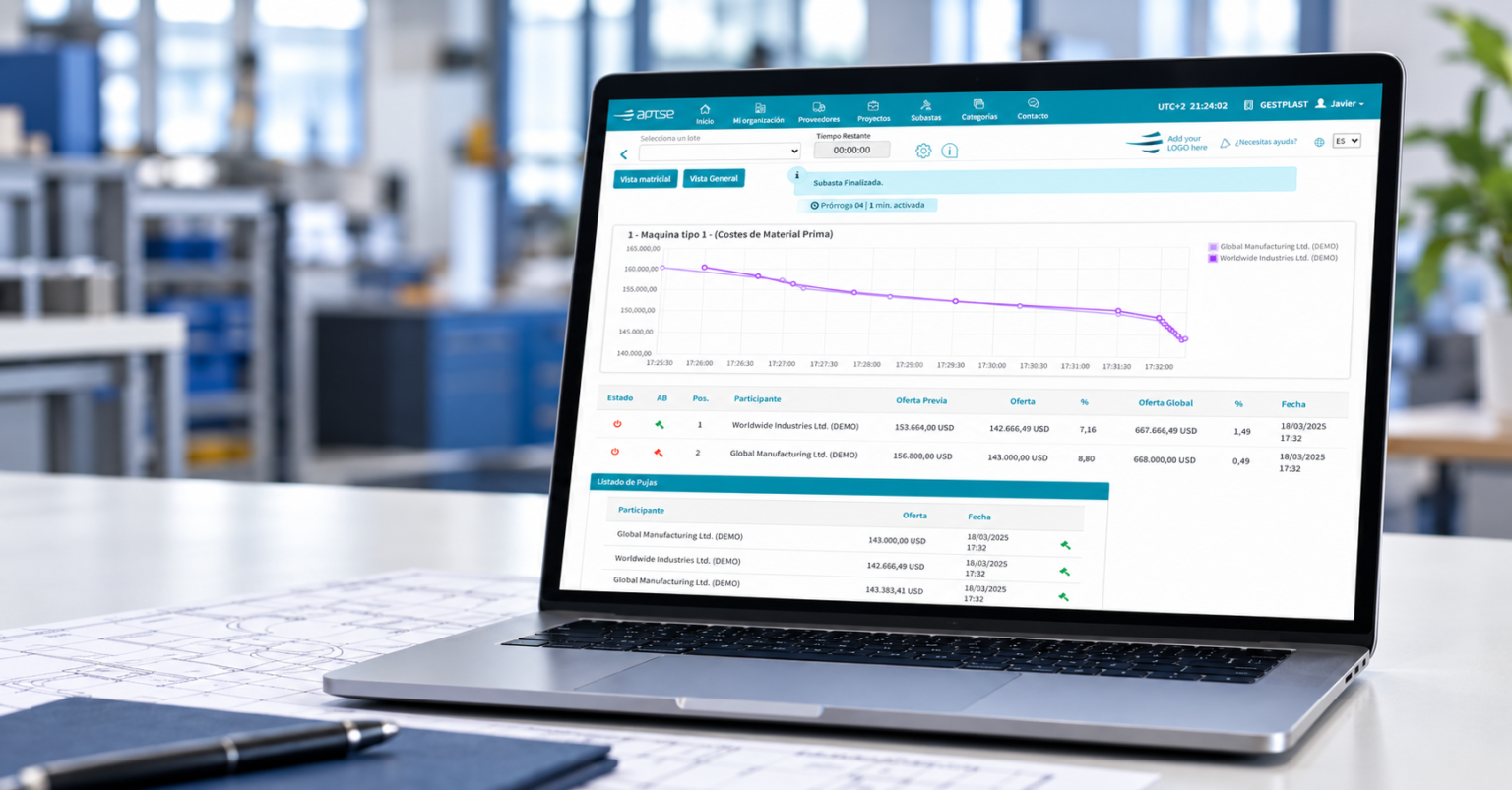
APTSE electronic auctions are private negotiations involving previously selected suppliers and clearly defined conditions. Gestplast’s approach is that electronic auctions should complement a procurement strategy when appropriate rather than automatically replacing existing purchasing procedures.
6. Select the supplier and document the agreement
The final selection should be the result of all the previous work: defining the need, selecting participants, analyzing proposals and negotiating the appropriate conditions.
Once a supplier has been selected, the final agreement should clearly document the price, specifications, delivery terms, commercial conditions and any other commitments reached during the process.
Good negotiation loses much of its value if the agreed conditions are not subsequently recorded and implemented correctly.
How digitalization improves procurement management
Digitalizing procurement does not simply mean replacing paper documents with emails or PDFs.
The real improvement comes from structuring processes and reducing the fragmentation of information.
Instead of maintaining specifications in one location, quotations in another and supplier communications in separate email threads, a digital platform can connect these elements to the same purchasing project.
APTSE focuses specifically on this part of the B2B procurement cycle. It brings together RFQ, RFI, supplier management and electronic auctions, allowing organizations to centralize requests, standardize supplier responses, compare proposals and maintain greater traceability.
During an RFQ, for example, Procurement can create the request, invite selected suppliers, share the relevant documentation, receive their proposals and compare the results.
During an RFI, the same environment can be used to structure questionnaires and analyze the information provided by different suppliers.
When the purchasing strategy requires further competitive negotiation, the process can continue through an electronic auction.
Digitalization therefore supports the procurement strategy rather than replacing it.
Common procurement management mistakes
One frequent mistake is to make decisions primarily on the basis of price before checking whether suppliers are actually offering equivalent products or services.
Another is to continue consulting the same suppliers indefinitely without periodically reviewing the market. Long-term relationships are valuable, but Procurement should still understand the alternatives available and whether existing conditions remain competitive.
Problems also arise when quotations are requested before the purchasing requirement has been properly defined. If every supplier interprets the project differently, meaningful comparison becomes difficult.
Information fragmentation is another major source of inefficiency. When documents, conversations and versions are distributed across different tools and users, maintaining traceability becomes considerably harder.
Finally, the conditions achieved during negotiation must be properly documented. Otherwise, part of the value created during the sourcing process may be lost during contracting or implementation.
How to optimize procurement management
Improving Procurement does not necessarily require completely redesigning every internal procedure.
A good starting point is to define requirements more precisely, maintain better knowledge of the supplier market and ensure that participants respond to a consistent structure.
Analysis should take place before negotiation, and decisions should be based on comparable information rather than assumptions or historical relationships alone.
Centralizing documentation and communications also improves efficiency and makes each project easier to review later.
The negotiation method should then be selected according to the characteristics of the purchase. Not every sourcing process requires an auction, just as not every project requires an RFI.
The technology should support these decisions and make them easier to execute. It should not replace procurement strategy.
Digitalize your procurement processes with APTSE
APTSE is a SaaS platform developed by Gestplast Ingeniería Consulting from its experience in procurement projects, RFx processes and electronic auctions.
It is designed to facilitate the stages in which Procurement needs to work with suppliers, gather information, request and compare proposals, manage documentation and carry out negotiations.
By centralizing these activities, companies can transform fragmented sourcing processes into more organized, comparable and traceable workflows while continuing to apply their own procurement strategy and criteria.
Request a personalized demonstration or try APTSE free for seven days.
Frequently asked questions about procurement management
What is procurement management?
Procurement management is the process through which a company identifies purchasing requirements, selects suppliers, requests and compares proposals, negotiates terms and formalizes the acquisition of products or services.
What is the main objective of procurement management?
There is no single objective. Procurement should achieve competitive purchasing conditions while ensuring that specifications, quality, delivery requirements and other relevant business needs are met.
Does procurement management mean choosing the lowest price?
No. Price should be evaluated together with factors such as quality, logistics, delivery times, warranties, commercial conditions, supplier capacity and supply risk.
What are the main stages of the procurement process?
A typical process involves defining the requirement, analyzing the market and potential suppliers, requesting information or quotations, comparing proposals, negotiating and formalizing the final agreement.
How does digitalization improve procurement management?
Digitalization helps structure supplier requests, centralize documentation and communications, standardize responses, compare proposals and improve process traceability.