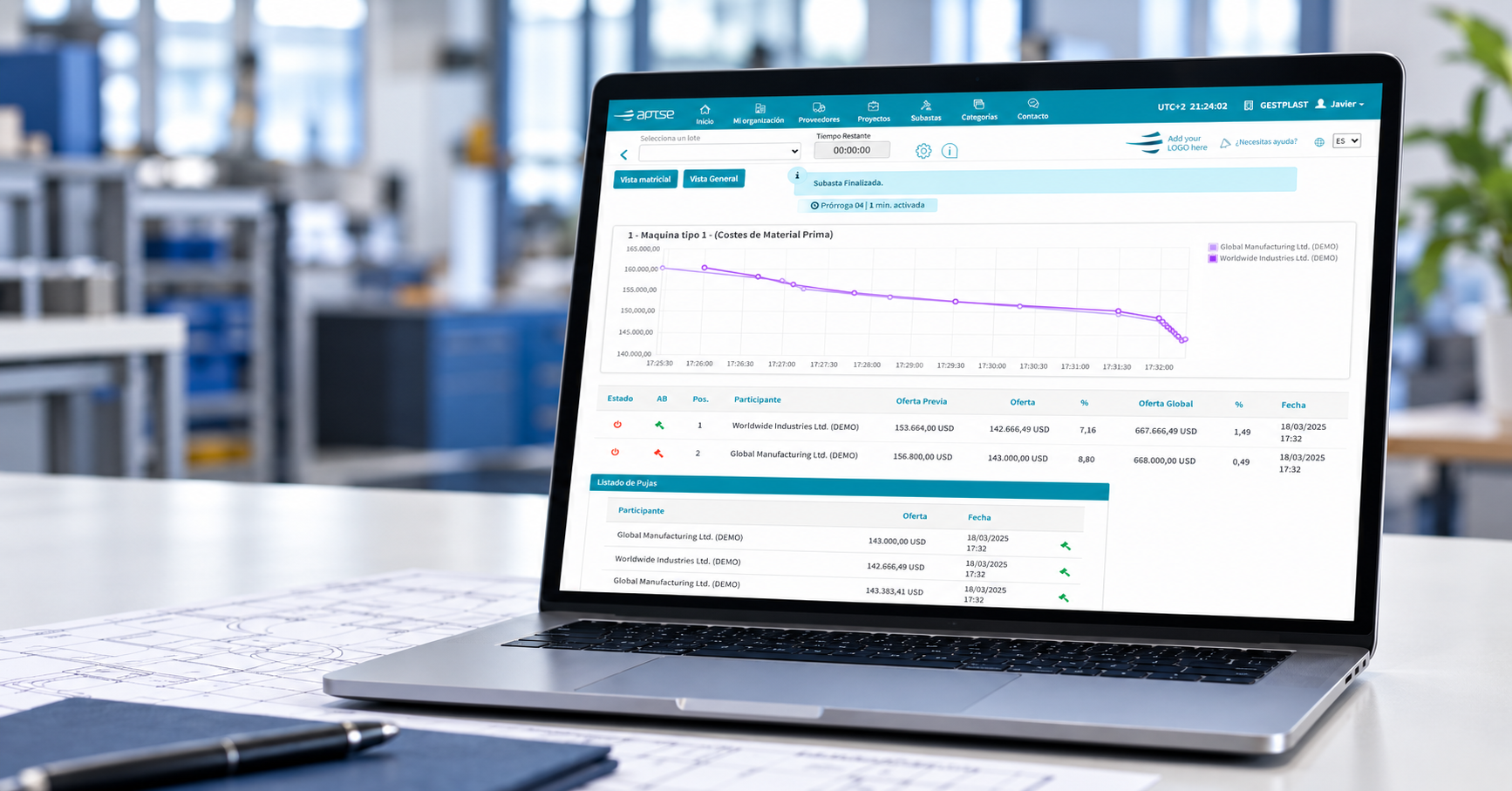
Negotiations for an ERP implementation at a European site achieved a €226,400 price reduction through an electronic auction. The best offer fell from €1,225,400 during the RFQ stage to €999,000, a reduction of 18.48%, while maintaining the agreed scope and requirements.
The case, shared by Gestplast, shows how negotiations for technology services can build on quotations that have already been reviewed and made comparable.
For procurement teams, it raises a practical question: how to organise price competition when the purchase includes services and deliverables that require technical evaluation.
The Project: Negotiating an ERP Implementation
The project involved implementing an ERP system at a European site.
According to Gestplast’s publication about the negotiation, the proposals were brought onto a common basis and checked for technical compliance before the auction. Preparation included defining the scope and deliverables, clarifying responsibilities and resources, resolving differences between quotations, and establishing negotiation and supplier selection rules.
The auction followed this preparatory work.
Negotiation Results
| Indicator | Result |
|---|---|
| Best valid offer obtained during the RFQ | €1,225,400 |
| Best offer following the electronic auction | €999,000 |
| Price reduction | €226,400 |
| Reduction against the best valid RFQ offer | 18.48% |
Source: Gestplast’s publication about the ERP implementation project.
The difference is €226,400, equivalent to approximately 18.48% of the initial reference amount.
This percentage expresses the improvement between the two reported offers. It does not measure the implementation’s return on investment or the reduction in the ERP system’s total cost of ownership.
Why Quotation Comparison Matters in an ERP Project
In a technology procurement process, two proposals may have different prices because they include different services.
For example, one quotation might cover more training sessions, a broader data migration scope or a different support period. Comparing only their totals would leave these differences unresolved.
Before negotiating, it is therefore important to check that suppliers are pricing a common scope. A request for quotation, or RFQ, helps organise requirements and obtain structured responses.
What to Define in Future Procurement Projects
The following points provide guidance for preparing this type of purchase. They are not a breakdown of the services included in this particular case:
- Deliverables: what the supplier must provide and how acceptance will be assessed.
- Responsibilities: which tasks belong to the implementation partner and which belong to the client.
- Data and integrations: which activities are included and what dependencies apply.
- Resources and schedule: expected resource commitments, milestones and conditions for meeting them.
- Training and support: scope, duration and service limitations.
- Scope changes: how changes will be identified, priced and approved.
The clearer these conditions are, the easier it becomes to determine whether a price difference reflects a more competitive proposal or a different service.
Evaluate the Technical Proposal Before Negotiating the Price
A quotation is only useful if it meets the company’s needs.
When preparing future negotiations, it helps to separate two decisions: determining which proposals are acceptable and comparing the commercial terms of the valid alternatives.
This approach allows the buyer to establish requirements that must be met before suppliers enter the negotiation. It also helps identify outstanding clarifications and prevents a lower price from concealing a technical shortfall.
Supplier selection and evaluation provides another part of the necessary information: experience, resources and the ability to carry out the work.
How to Interpret the Price Reduction
A negotiation result should be considered alongside its reference point and scope.
When assessing a technology purchase, distinguish between:
- Price reduction: the difference between the offers compared for a defined scope.
- Implementation cost: all costs required to put the solution into operation.
- Total cost of ownership: acquisition, operating, maintenance and other costs over the period being assessed.
These measures answer different questions. A reduction in a supplier’s offer does not, by itself, establish the project’s full cost or return on investment.
Documenting the reference point helps procurement teams communicate results accurately and makes subsequent reviews easier.
What Other Procurement Teams Can Learn
Preparing a technology negotiation can be organised around three checks:
1. Confirm That Quotations Cover the Same Requirement
Review deliverables, exclusions and responsibilities before comparing prices. Differences should be clarified or clearly identified.
2. Establish Which Conditions Must Remain Unchanged
Define the requirements that cannot change during the negotiation. If a proposal introduces a change, review it before treating the offer as equivalent.
3. Carry the Negotiated Result into the Final Terms
Before formalising the agreement, check that the selected price, scope and commitments appear in the final documentation.
These checks connect procurement preparation with negotiation and subsequent project delivery.
Prepare Your Technology Negotiations with APTSE
APTSE’s RFQ software allows buyers to structure requests for quotation, break down costs and analyse supplier responses in a centralised environment.
Technical validation and supplier selection remain the responsibility of the project team. The platform helps organise the information and communications needed to manage the process.
If you are preparing a technology procurement project, contact the APTSE team to discuss your requirements and explore how to organise the negotiation.