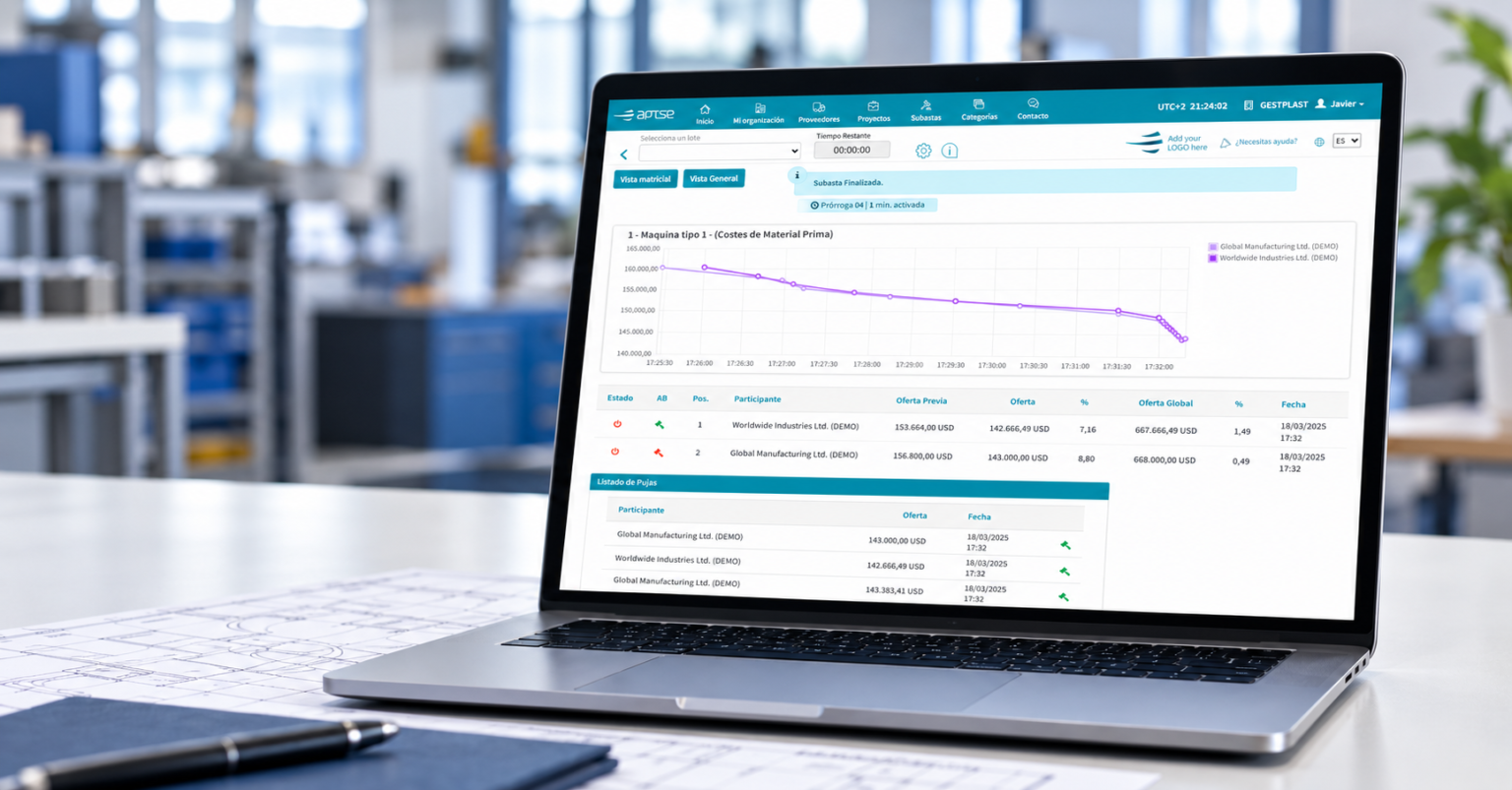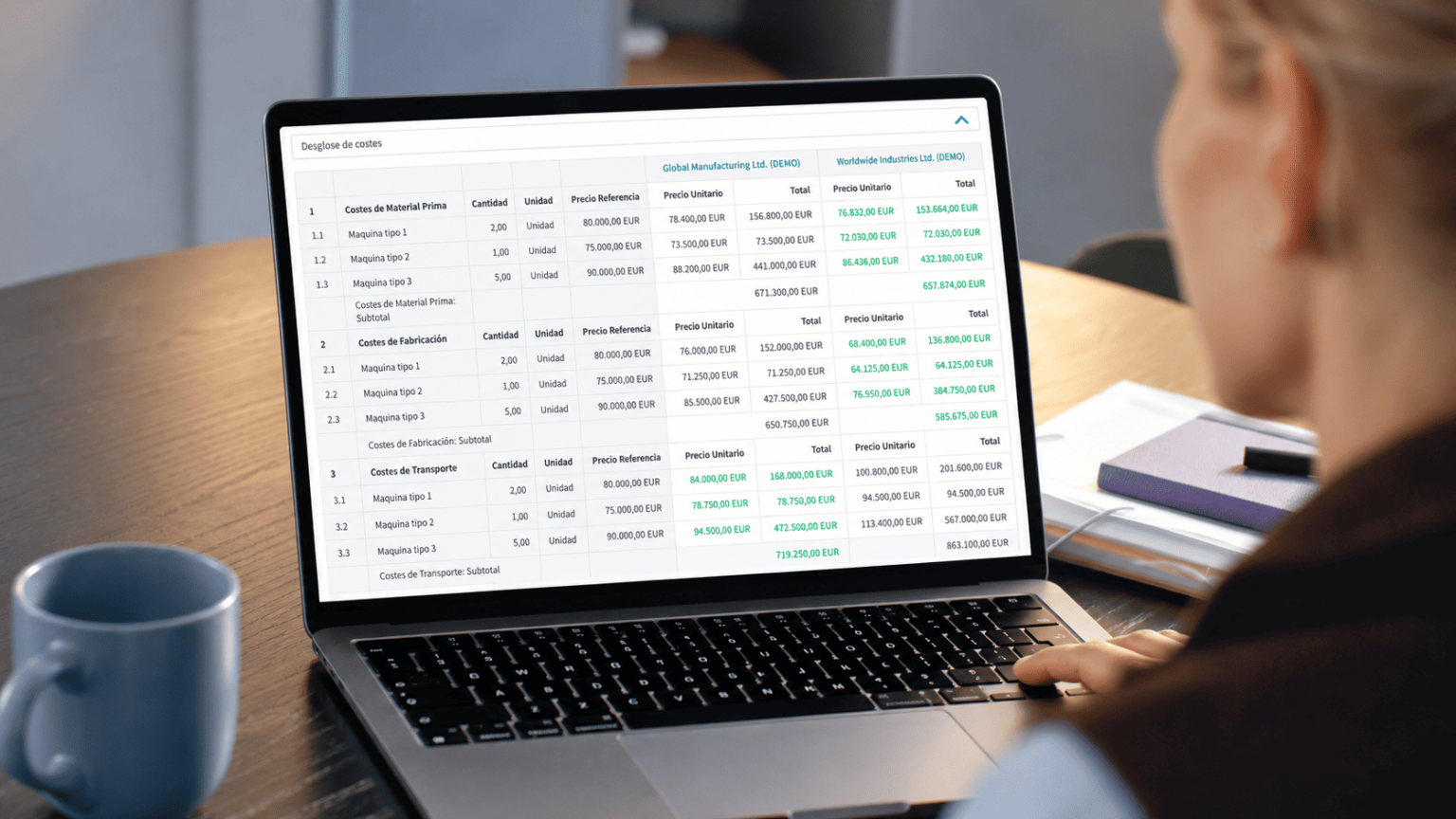
The procurement of 560 motors for an industrial project achieved a €452,200 price reduction through a Dutch electronic auction. Four suppliers participated, and the final result was 21.35% below the best valid offer received during the RFQ stage.
Preparation was a key part of the process. Before price negotiations began, proposals had to meet the technical specifications, quantities, delivery schedule and commercial terms.
This project, shared by Gestplast on LinkedIn, illustrates how electronic negotiations can build on prior evaluation so that suppliers compete on a common scope.
The Project: Procuring 560 Motors for an Industrial Application
The purchase comprised 560 motors in the mechatronics category for an industrial project.
Four suppliers participated. Before the auction, their proposals had to be valid and comparable across four areas:
- Technical specifications: meeting the required product characteristics.
- Quantities: covering the planned project volume.
- Delivery schedule: meeting the specified timetable.
- Commercial terms: submitting proposals in line with the purchasing conditions.
Once compliance had been validated, price negotiations took place through a Dutch electronic auction.
| Project detail | Result |
|---|---|
| Purchase scope | Motors in the mechatronics category |
| Quantity | 560 units |
| Participating suppliers | 4 |
| Auction format | Dutch electronic auction |
| Best valid RFQ offer | €2,118,200 |
| Final result | €1,666,000 |
| Price reduction | €452,200 |
| Reduction from the best valid RFQ offer | 21.35% |
The RFQ as the Starting Point for Negotiation
A request for quotation, or RFQ, allows buyers to collect supplier proposals when the purchasing requirement is sufficiently defined.
In this case, the best valid offer at that stage was €2,118,200. This amount provided the baseline for measuring the subsequent price reduction.
The word “valid” matters: a proposal must be assessed against the requirements it needs to meet. A lower price may reflect a different scope, different delivery terms or a solution that does not fulfil the need.
Before moving to price negotiations, the buyer should therefore resolve any differences that prevent proposals from being compared on a common basis.
What Makes Supplier Offers Comparable?
Preparing an industrial purchase requires a clear definition of what is being negotiated. The four areas addressed in this project provide a useful guide for other procurement processes.
Define the Technical Requirements
Suppliers need to understand the characteristics the product must meet.
Where alternatives are accepted, the buyer should explain how they will be evaluated and whether they can take part in the same negotiation. This helps prevent apparently comparable prices from representing different solutions.
Establish the Quantities
The requested volume affects both the commercial proposal and the supply capacity required.
The comparison should use the same quantities and identify any conditions associated with minimum orders or volume changes, where applicable.
Specify the Delivery Schedule
Timing forms part of the purchasing requirement.
A proposal should be assessed against when the goods are needed and the commitments the supplier can make. Price must be considered alongside the ability to meet those deliveries.
Align the Commercial Terms
Payment terms, quotation validity and included items can all affect the comparison.
Documenting these conditions before negotiation helps identify what each supplier is offering and which points need clarification.
These checks should be adapted to each purchase and form part of effective supplier management and evaluation.
The Dutch Auction as the Price Negotiation Stage
Once the proposals had been validated, the project moved to the Dutch electronic auction.
The sequence matters: participation conditions were established and compliance was checked before price negotiations began.
Electronic auctions organise competition under defined rules. For the result to be useful, participants need to understand the scope and conditions they are negotiating against.
In an industrial purchase, this preparation helps the procurement team assess the economic outcome alongside the technical and commercial information already evaluated.
How the 21.35% Reduction Was Calculated
The final result was €1,666,000, compared with the €2,118,200 best valid RFQ offer.
The difference was:
€2,118,200 − €1,666,000 = €452,200
The percentage reduction is calculated against the initial baseline:
€452,200 ÷ €2,118,200 × 100 = 21.35%, rounded to two decimal places.
This is a price reduction measured against a specific, documented baseline. Identifying that baseline makes the result easier to understand and distinguishes it from a comparison against an estimated budget or historical prices.
For other projects, the buyer should define the baseline from the outset and check that the amounts being compared cover the same scope.
Lessons for Industrial Procurement
The project illustrates the value of connecting the RFQ, requirements validation and electronic negotiation stages.
Three practical principles can be applied when preparing future purchases:
- Define the requirement before requesting prices. Suppliers need enough information to prepare their responses.
- Resolve differences before negotiating. Proposals should be comparable and meet the specified requirements.
- Measure the result against a clear baseline. The financial improvement should be explainable and verifiable.
The outcome of this operation reflects its particular conditions. Its main lesson for other purchasing processes is the value of preparing supplier competition before the auction begins.
Prepare Your Industrial Negotiations with APTSE
A purchase involving technical requirements and a delivery schedule needs organised information, comparable proposals and clear negotiation rules.
APTSE supports structured requests for quotation and electronic negotiation processes. The Gestplast team can also assist with auction preparation and management.
If you are considering this approach for an industrial purchase, contact our team to discuss your project or request a demonstration.