APTSE managed six electronic auctions for the procurement of metal parts, combining classic and Dutch reverse auctions. The project delivered total savings of €403,000, equivalent to approximately 8.9% of the overall reference value.
An industrial purchase divided into several lots involves a different negotiation for each group of supplies. Contract values, participant numbers and opportunities for improvement can vary considerably within the same project.
This case study shows how electronic auctions can support metal parts procurement across multiple lots, using different negotiation formats and assessing both individual results and overall savings.
The Project: Six Lots of Metal Parts
The project involved the procurement of metal parts divided into six lots, with a combined reference value of approximately €4.51 million.
Six electronic auctions were organised, one for each lot. Participation ranged from three to nine suppliers per auction.
The auctions were structured as follows:
- Three classic, or English-style, reverse auctions for lots 1, 2 and 4.
- Three Dutch reverse auctions for lots 3, 5 and 6.
This combination enabled the six lots to be negotiated within a single project using two different auction mechanisms.
Two Auction Formats Within One Project
In classic reverse auctions for procurement, suppliers submit bids and can improve them during the scheduled auction period. The process allows the buyer to track how bids evolve as participants compete.
In Dutch reverse auctions, the price changes at configured intervals, and suppliers decide when to accept the proposed amount.
APTSE’s electronic auction software supports both formats and allows the conditions of each auction to be configured.
Both formats were used in this metal parts procurement project, and both contributed to the total savings.
Results Across the Six Auctions
Every lot achieved savings, with reductions ranging from 3.22% to 23.50%.
| Lot | Auction format | Participants | Savings |
|---|---|---|---|
| Lot 1 | Classic reverse auction | 9 | 6.26% |
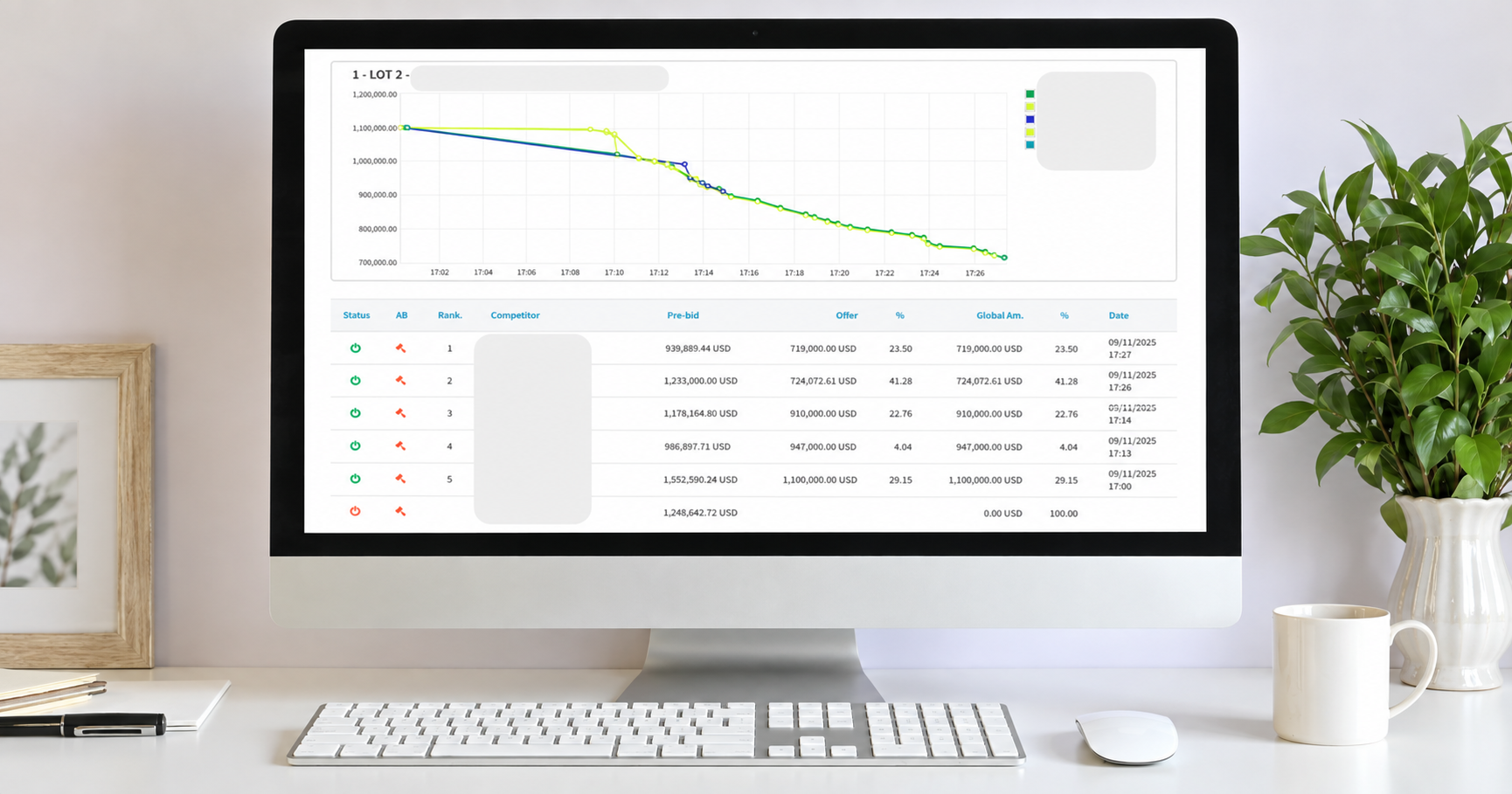
| Lot 2 | Classic reverse auction | 6 | 23.50% |
| Lot 3 | Dutch reverse auction | 4 | 7.53% |
| Lot 4 | Classic reverse auction | 5 | 3.22% |
| Lot 5 | Dutch reverse auction | 4 | 6.64% |
| Lot 6 | Dutch reverse auction | 3 | 3.95% |
Total savings reached €403,000. The consolidated project report records an overall reduction of approximately 8.9%.
This percentage reflects the combined financial result. Each lot carries a different weight according to its value, so the overall figure is not a simple average of the six savings percentages.
Lot 2: The Largest Percentage Reduction
Lot 2, negotiated through a classic reverse auction with six participants, achieved 23.50% savings.
It also made the largest financial contribution to the result, generating approximately €188,000 in savings, according to the project report.
This illustrates why each lot should be assessed individually: opportunities for improvement can differ substantially within the same procurement project.
Lot 5: The Impact of Purchase Value
Lot 5, negotiated through a Dutch reverse auction with four participants, achieved 6.64% savings.
Although its percentage reduction was lower than that of lot 2, its reference value of approximately €1.21 million meant it contributed around €80,000 in savings.
In a procurement cost reduction strategy, percentages and monetary amounts should be assessed together. A moderate improvement on a high-value purchase can make a substantial contribution to the overall result.
What This Case Shows About Industrial Procurement
One Project Can Combine Different Negotiation Formats
The purchase was managed through six separate auctions using two formats. This illustrates how a negotiation can be structured by lot, with different mechanisms used within the same industrial project.
Participant Numbers Alone Do Not Explain Savings
Lot 1 had the highest number of participants, with nine suppliers, and achieved savings of 6.26%. However, the largest percentage reduction came from lot 2, with six participants.
These results show that greater participation does not automatically lead to a higher savings percentage. Competition should be assessed alongside the conditions and starting point of each negotiation.
Every Lot Contributes to the Overall Result
All six lots delivered savings, although the amounts varied. The overall result came from combining these improvements, from the 3.22% reduction in lot 4 to the 23.50% reduction in lot 2.
Assessing a procurement project therefore requires looking at both the strongest individual opportunities and the contribution of the remaining lots.
Reporting Makes Results Easier to Analyse
The project reports provide information on participants, values and savings for each lot, alongside the consolidated result.
This helps the procurement team identify where financial improvements were achieved and communicate its contribution using concrete data.
Electronic Auctions for Complex Industrial Procurement
This metal parts project delivered €403,000 in savings through six electronic auctions, with between three and nine suppliers participating in each lot.
The case adds to APTSE’s published examples of industrial negotiations, including the reverse auction for a waste gas treatment machine, and demonstrates how these tools can support a purchase divided into several lots.
The project provides a concrete example of how different auction formats can help improve the commercial outcome of an industrial purchase and support the monitoring of each negotiation.
Want to Apply This Approach to Your Procurement Projects?
APTSE can manage your electronic auctions or help you run them using our SaaS platform.
If your company needs to negotiate an industrial purchase across multiple lots, contact our team to discuss your project or request a demo.